Crew size drives unit count more than square footage does. The long-standing sanitation benchmark used across the trades is one restroom per 10 workers on a 40-hour week with weekly service — so a 12-man framing crew…
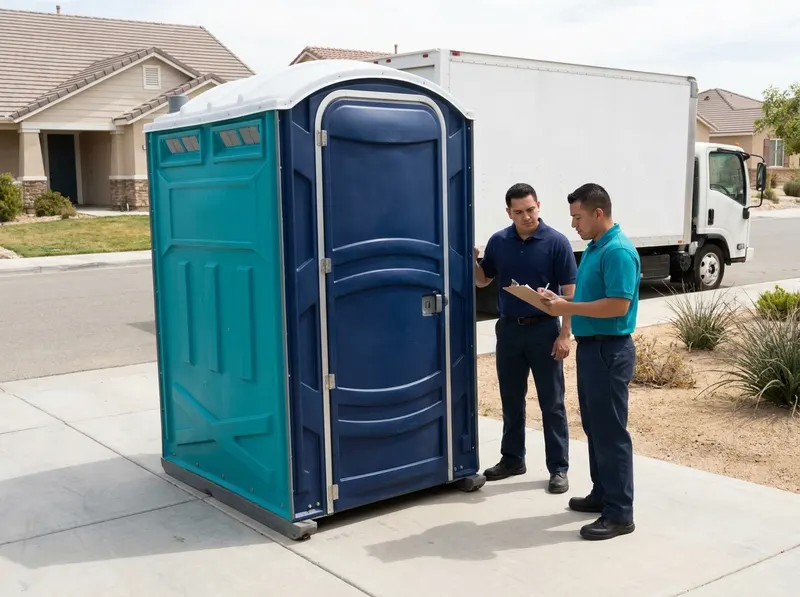
Crew size drives unit count more than square footage does. The long-standing sanitation benchmark used across the trades is one restroom per 10 workers on a 40-hour week with weekly service — so a 12-man framing crew in Orangecrest is a two-unit site, and a 6-man tenant-improvement crew downtown is one unit plus a hand-wash station. If headcount ramps mid-project, the count gets adjusted on the next service visit instead of at the start of a new billing period. Undersizing is the single most common reason a jobsite unit gets flagged, and it is cheaper to add a unit than to explain a full one to an inspector.
Placement is where Riverside geography actually matters. Hillside lots in Hawarden Hills and the upper Canyon Crest streets often have no flat staging pad near the work face, so the unit sits at the driveway apron or a graded bench and gets serviced from the street — a truck reach of roughly 25 to 30 feet of hose is the practical limit before an extra-reach charge applies. Tract and infill work in Mission Grove, Victoria, and Orangecrest is straightforward: place inside the fence line, away from the delivery lay-down area, on soil the water truck won't turn to mud. Downtown tenant improvements near the Riverside Municipal Auditorium and the Mission Inn Hotel & Spa block usually need the unit inside the construction fence or in a permitted parking space, with a delivery slot early enough to clear before the business day. Northside and Arlanza industrial sites, plus the La Sierra and Casa Blanca corridors off Van Buren and La Sierra Avenue, are typically first-half-of-morning drops because of the 91 and 60 traffic pattern. Wood Streets remodels are the tight ones — narrow driveways, mature trees, and street parking mean the placement spot gets confirmed by phone before the truck rolls.
Choose monthly construction rental over a short-term event drop when the site will be occupied for more than about two weeks and the same unit will absorb daily use from a working crew. That is the trade-off: event-grade units are cleaned to a guest standard for a weekend and cost more per day, while construction units are built for high-traffic, dusty, boots-and-tools use and are priced by the month with a fixed service cadence. Inland heat is the other reason cadence matters — Riverside summers regularly sit above 100°F and a tank left past its service date in that heat becomes an odor complaint from the neighbors before it becomes a crew complaint. Sites running two shifts, doing heavy concrete work, or exceeding the 10-worker ratio should move to twice-weekly service rather than stretching a weekly visit. Santa Ana wind events are worth planning for as well: units on open pads get placed against a fence line or block wall, and anchoring can be requested for exposed grading sites off Sycamore Canyon and along the Northside flats.
Two things get documented on every construction order: the delivery date and the recurring service day. Delivered on the date promised is the standard the schedule is built around, and if a general contractor needs a restroom count and service record for a permit officer or a safety audit in Riverside County, that is provided in writing. Add-ons that trigger extra charges are stated up front — additional service visits, relocations within the site after initial placement, extra-reach pumping, and units blocked by equipment or locked gates at the scheduled visit. Call (951) 636-6720 with the job address and start date to get a sizing recommendation and a delivery window.
Every job gets a firm, written price after a free on-site visit.
Tell us about your construction site portable toilet rental job in Riverside and we'll send a clear, written quote — usually the same day.
 RapidNest Temporary Restrooms Services